
I’d guess that most people feel guilty about not stretching enough. Interestingly, health professionals have changed our tune about the importance of stretching. Research over the last 20 years has suggested static stretching is not as beneficial as was once thought. I’ve been having conversations about the reasons to stretch (or not) for at least the last 15 years, but the current science on stretching just isn’t catching on with the general public. So, what do we know?… DOES STRETCHING PREVENT INJURIES?No. There is a lot of evidence that stretching does not reduce the risk of injury. This systematic review and meta-analysis of randomised controlled trials found stretching does not prevent injuries, whether done before or after training. This randomised controlled trial, and this systematic review concluded stretching before exercising only reduces the risk of injury by less than 1%. Therefore, in practical terms the average athlete would need to continuously stretch for 23 years to prevent one injury. Definitely not worth it. DOES STRETCHING HELP MUSCLE SORENESS?No. A systematic review concluded that stretching before or after exercising does not confer protection from muscle soreness (ref). Stretching was found to reduce muscle soreness by a trivially small amount - less than 2%. “Most athletes will consider effects of this magnitude too small to make stretching to prevent later muscle soreness worthwhile.” DOES STRETCHING INCREASE RANGE OF MOVEMENT?No. Stretching for the amount of time that most people hold their stretches, does not make any actual difference to flexibility. The mechanisms of stretching have been extensively studied. There is moderate evidence from a systematic review that stretching can increase flexibility (ref). However, to achieve an actual improvement in muscle compliance we know the total duration of stretching needs to be at least five minutes per muscle group (ref). Therefore to stretch hamstrings, quads, and calves, both left and right, as part of a warm up before sport, it should take at least 30 minutes - which is practically impossible as part of a warm up. We know the one or two, thirty second stretches the majority of athletes would perform during their warm up are just not enough to actually improve flexibility (ref). DOES STRETCHING HELP PERFORMANCE?What people find most surprising about static stretching is it impairs subsequent performance (ref). A substantial body of research has shown that sustained static stretching acutely decreases muscle strength and power (ref). Stretching before an endurance event lowers endurance performance and increases the energy cost of running (ref). Cycling efficiency and time to exhaustion are reduced after static stretching (ref). Pretty much any measure of performance is made worse by stretching. Static stretching impairs:
A comprehensive review (ref) from 2011 concludes: “Based on the majority of the literature, it would seem logical to recommend that prolonged static stretching not be performed prior to a high level or competitive athletic or training performance.” WHAT ABOUT DYNAMIC STRETCHING?Obviously, I’ve been talking about sustained, static stretching. It has been shown that there is no stretch-induced strength loss with dynamic stretching (ref). However, the efficacy of dynamic stretching for increasing flexibility is yet to be determined (ref). SO WHY STRETCH?I do get people to stretch if there’s a specific pathology that needs treating. And you do need to stretch if you need flexibility to achieve certain positions in your sporting performance (hurdlers / gymnasts / divers, etc). SO SHOULD WE STOP STRETCHING?If you’re happy with your stretching routine, keep doing it. If you think it feels good to stretch after exercise then there’s no harm. But I definitely wouldn’t recommend stretching at the expense of other techniques that are proven to aid recovery. 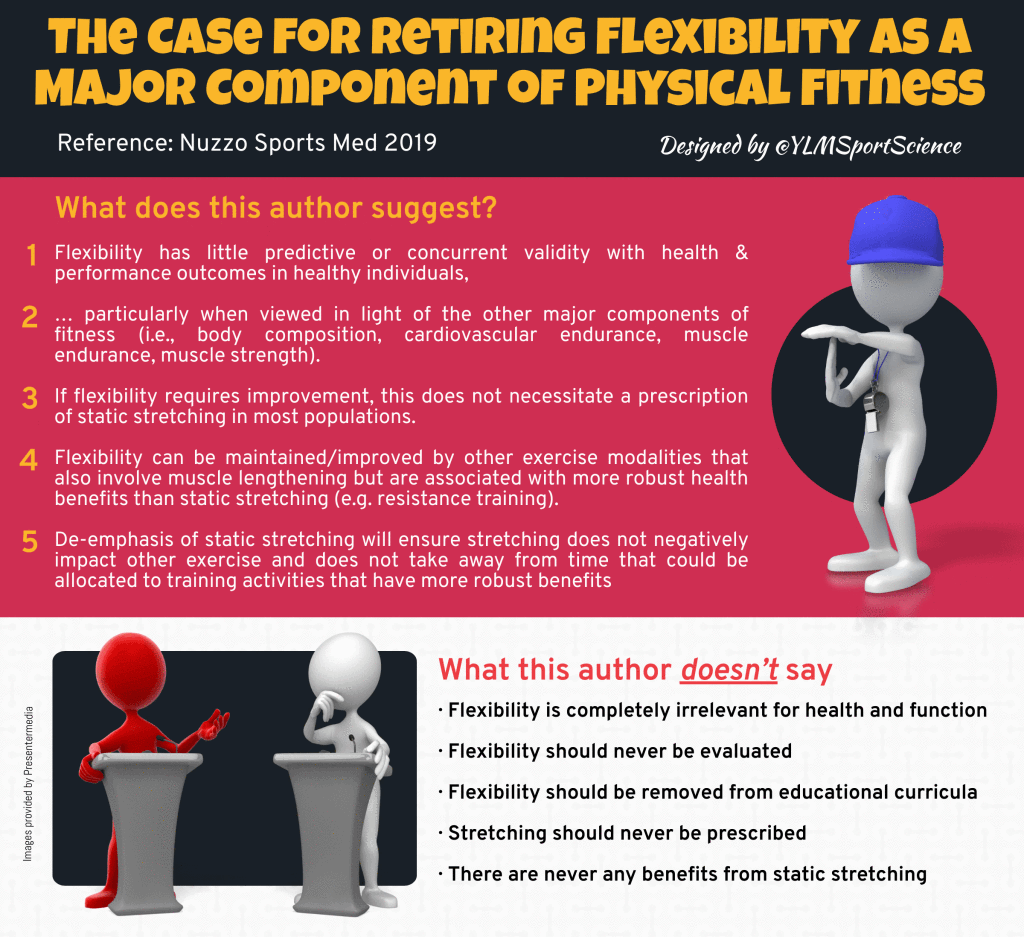 REF:

 More Than "Just a Sprain": 5 Surprising Realities of Ankle Injuries You Can't Afford to Ignore You’re in the heat of a weekend soccer match or halfway through a morning trail run when the world tilts. Your foot catches an uneven patch of earth, your weight shifts violently, and your ankle rolls inward. You feel that sickening, sharp pop. After a few minutes of wincing, you hobble to the sidelines, telling your teammates you’ll just "rub some dirt on it" and ice it for a night. By Monday, you assume, you'll be fine. In my clinic, we call this the "walk-off" injury. It is a classic trap. While the initial fire of pain usually dies down within a fortnight, the embers of instability often remain, waiting to reignite. As a Doctor of Physical Therapy, I see the long-term fallout of this "minor" event every day. Current sports medicine research is clear: treating an ankle sprain as a temporary inconvenience is a gamble with your foundation. Before you assume you’re in the clear, there is an "insider" tool we use in the ER called the Ottawa Ankle Rules. If you have pain in the bony bumps of your ankle and you cannot take four steps immediately after the injury, you need an X-ray. If you can walk but the pain persists, you aren't out of the woods—you may have avoided a fracture, but you likely haven't avoided the "50% Ghost." 1. The "50% Ghost" Phenomenon: Why We Underestimate the Damage Lateral ankle sprains account for roughly 14% of all sports-related orthopaedic emergency visits. But here is the staggering reality: approximately 50% of people who sustain an ankle sprain never seek medical attention. This creates a "ghost" population of injured athletes who are navigating life with unaddressed ligamentous tears and mechanical imbalances. Without a professional diagnosis, it is impossible to identify which specific structures were damaged or how to prevent the next roll. As the latest clinical research emphasises: "Appropriate management of an athlete with a lateral ankle sprain is vital to successful recovery. Proper diagnosis and identification of affected structures... [allows for] an individualised evidence-based intervention plan." Proper diagnosis isn't just about "ruling out a break"; it’s about mapping the path back to a stable foundation. 2. Counter-Intuitive Healing: Why Total Rest Might Be Ruining Your Recovery The "old-school" protocol for a sprained ankle was a heavy dose of rest and long-term immobilisation. Modern evidence has flipped this script. While the "enemy" used to be movement, we now know the real enemy is a lack of progression. There is a vital nuance here: while long-term inactivity is detrimental, short-term immobilisation (such as a below-knee cast for 10 days) has actually been shown to be beneficial for severe injuries. The key is what happens next. Research favors early weight-bearing and functional movement over total inactivity. Even for severe Grade III sprains, early, controlled mobilisation improves recovery speed and restores mobility without sacrificing long-term stability. If you are dealing with early-stage swelling, skip the rigid plastic braces. Evidence shows that lace-up braces are more effective at reducing short-term swelling and disability, allowing the joint to compress while still facilitating the functional movement your tissues crave to heal correctly. 3. The Weakest Link: The ATFL and the 70% Rule To fix a foundation, you have to understand the "recipe for disaster" that broke it. A lateral ankle sprain isn't just a simple roll; it is a specific pathoanatomical mechanism: the forefoot moves inward (adduction), the heel turns (inversion), the toes point down (plantar flexion), and—crucially—the shin bone rotates outward (tibial external rotation). This specific combination puts the Anterior Talofibular Ligament (ATFL) in the crosshairs. The ATFL is the weakest link in the ankle, and roughly 70% of all lateral sprains involve an isolated injury to this structure. Knowing exactly which ligaments are involved is the only way to predict your "Return to Play" date. A Grade I injury (no laxity) takes an average of 7.2 days to recover. However, if your clinician performs a Talar Tilt test and finds involvement of the Calcaneofibular Ligament (CFL)—indicating a Grade III injury—that timeline jumps to 55.4 days. Without this clinical distinction, you are likely to return too early, setting the stage for a lifetime of instability. 4. The Surprising Brain-Body Connection: Your Hips and Ankle Health We often treat the ankle as an isolated hinge, but your body is a kinetic chain where the brain is the master controller. One of the most significant findings in sports medicine is the link between "proximal musculature"—your hips and glutes—and ankle stability. When you sprain your ankle, it isn't just the ligament that suffers; your nervous system undergoes "sensorimotor deficits." Essentially, the brain "dims the lights" on your glute activation following an ankle injury. This decreased alpha motor neuron pool excitability means your hips don't fire fast enough to stabilise your leg when you land. If your rehab program only focuses on the foot and ignores "re-lighting" the brain’s connection to the hips and glutes, you are building a house on sand. Chronic Ankle Instability (CAI) is often less about a loose ligament and more about a "sleepy" hip. 5. The Three-Year Shadow: The Lingering Cost of Poor Management An untreated sprain leaves a shadow that can haunt you for years. While most pain subsides within two weeks, the International Ankle Consortium warns that up to 34% of patients experience a reinjury within three years. They identify a dangerous cycle of: "Persistent 'giving way' and 'feelings of instability,' often accompanied by residual weakness, stiffness, and joint noise (crepitus)." Want to know if you’re still living in that shadow? Try the Lateral Hop Test: hop as far as you can laterally (sideways) three times on your injured leg. If you feel hesitant, unstable, or "weak in the knees," your recovery is incomplete. Ignoring these signals doesn't make them go away; it opens the door to post-traumatic osteoarthritis and permanent functional loss. Bonus: The Future of Rehab—From Dry Needling to Brain TrainingCutting-edge research is moving beyond the ice pack to "reboot" the system:
Conclusion: A New Standard for Your Foundation The evidence is clear: breaking the cycle of reinjury requires more than just "walking it off." It requires a sophisticated, evidence-based approach that combines short-term protection with aggressive manual therapy, hip-centric strengthening, and sensorimotor retraining. The next time you "just" roll your ankle, will you treat it as a minor inconvenience, or will you give your foundation the expert care it needs to stay standing for the long haul?  1. Introduction: The Sound of the "Snap" For many athletes and active individuals, the injury begins with a sudden, unmistakable "pop." It is frequently described as the sensation of being kicked hard in the back of the leg, only to turn around and find no one there. This is the hallmark of an acute Achilles’ tendon rupture. For decades, the standard response in sports medicine has been a debate over the best path to recovery: should a surgeon stitch the tendon back together, or can the body heal effectively on its own? A landmark multicenter, randomized, controlled trial published in the New England Journal of Medicine has provided new clarity. Following 526 patients, this study—one of the largest and most definitive of its kind—challenges the long-held assumption that surgery is the mandatory gold standard for a full recovery. 2. The Scoreboard is Level: Why Surgery Doesn't Guarantee "Better" Health The study’s primary metric was the Achilles’ tendon Total Rupture Score (ATRS), a 100-point scale where higher scores indicate better symptoms and physical activity levels. Researchers measured the "mean change" from a patient’s pre-injury health. At the 12-month mark, the results were remarkably similar:
It is important to understand two things about these numbers. First, the negative values represent the deficit from pre-injury health; at one year, no group had returned to their perfect "0" baseline, showing that recovery is a long-term process for everyone. Second, the differences between these groups (ranging from 1.0 to 2.6 points) are clinically insignificant. In the medical world, the Minimal Clinically Important Difference (MCID) for this score is 8 to 10 points. Because the gap between surgery and non-surgery was so small, a patient wouldn't even perceive a difference in their recovery quality. "In patients with Achilles’ tendon rupture, surgery (open repair or minimally invasive surgery) was not associated with better outcomes than nonoperative treatment at 12 months." 3. Power and Performance: The Physical Equality of Recovery Beyond how patients felt, the researchers tested how they performed using the "limb-symmetry index" (LSI). In this index, a score of 100 represents a perfect match, meaning the injured leg performs exactly as well as the healthy one. At one year, there were "no material differences" in physical performance across the three groups, with most scores hovering between 82 and 103. Whether a patient had surgery or not, their functional ability to return to activity was essentially equal. The specific tests included:
4. The Re-rupture Trade-off: A Calculated Risk While the health scores and performance levels were equal, the data did highlight one significant advantage for surgery: a lower risk of the tendon snapping again. The statistics showed a 6.2% rerupture rate for those who chose nonoperative treatment. In contrast, both surgical groups saw a significantly lower rerupture rate of only 0.6%. This presents a clear, calculated trade-off. Choosing nonoperative treatment avoids the operating table but carries a roughly 6% risk of needing to start the grueling recovery process all over again. Surgery nearly eliminates that specific risk, but it introduces different complications that can be equally frustrating. 5. The Nerve of Minimally Invasive Surgery: A Hidden Complication Minimally invasive surgery is often marketed as the "best of both worlds"—the mechanical security of surgery with smaller incisions. However, the study revealed a surprising downside: this method had the highest incidence of nerve injuries, likely because smaller openings provide less visibility for the surgeon to avoid delicate structures. Nerve damage, typically affecting the sural nerve which provides sensation to the foot, occurred in:
For patients, the takeaway is impactful: "less invasive" does not automatically mean "safer." While you reduce the risk of a second tear, you significantly increase the risk of permanent numbness or nerve pain. 6. Conclusion: A New Blueprint for Recovery The New England Journal of Medicine study shifts the conversation surrounding Achilles ruptures away from "surgery is mandatory" and toward a "shared decision-making" model. Because long-term physical power and patient-reported health are effectively the same regardless of the method, the choice comes down to personal risk tolerance. If you were the patient, how would you weigh the options? Would you accept a 6.2% rerupture risk to avoid surgery, or would you prefer the 0.6% rerupture rate of surgery, knowing it comes with a 5.2% risk of nerve damage? There is no longer a single "right" answer—only the evidence-based choice that fits your life. 
|
Archives
October 2026
Categories
All
|

 RSS Feed

|
|



Copyright© 2026| Fit As A Physio | ABN 62855169241 | All rights reserved | Sitemap